The weeks after the holidays often feel strangely disorienting. The rush is over, the calendar is quieter, and life slowly returns to its usual pace. Yet instead of feeling restored, many people notice the opposite: mental fog, physical tension, difficulty concentrating, emotional fatigue, or the persistent sense that their body has not caught up to the new year.
There is a reason for this. Your nervous system does not operate on the same schedule as your calendar. It responds to pace, pressure, stimulation, rest, and recovery. It holds onto stress long after the holidays end, and the physical and mental “comedown” that follows the season is not a lack of discipline or motivation. It is your body trying to regulate itself after weeks of heightened activity.
Understanding how your nervous system functions during and after the holidays can help you move out of survival mode and back into clarity, focus, and steadier energy.
Understanding What Happens to Your Nervous System During the Holidays
For several weeks, your daily rhythm changes significantly. Even if the season is enjoyable, it still places a higher demand on your nervous system than usual. Consider what happens in a typical December:
- Your schedule becomes irregular.
- Your sleep patterns shift.
- Social interactions increase.
- Noise, lights, travel, and crowds create sensory overload.
- Routines disappear.
- Emotional stress rises.
- Work deadlines stack up before time off.
- Family expectations require time and attention.
Even positive experiences activate your sympathetic nervous system, the system responsible for alertness and energy. But when this activation continues for too long without enough recovery time, the body struggles to rebalance.
The result is a form of nervous system fatigue that shows up in both physical and mental symptoms.
Common Signs Your Nervous System Is Overloaded After the Holidays
Most people move into January thinking they should feel refreshed. Instead, they experience the opposite. Common symptoms include:
- difficulty concentrating
- tight shoulders and neck tension
- Headaches
- irritability or emotional sensitivity
- fatigue despite adequate sleep
- heightened anxiety
- disrupted appetite
- trouble “starting” the day
- restlessness or inability to relax
- tension in the jaw or chest
- mental fog
None of these symptoms mean anything is wrong with you. They are your body’s way of signaling that it has been operating at a high level for too long.
The goal is not to power through. The goal is to support your nervous system so it can shift out of stress response and back into a state where focus, clarity, and calm are possible.
Why the Post-Holiday Dip Happens
Your nervous system has two primary modes:
Sympathetic activation: alertness, readiness, energy
Parasympathetic activation: rest, digestion, recovery, focus
The holidays keep you in a sympathetic-heavy state, even when you feel happy or excited. It is a lot of stimulation, noise, decision-making, travel, planning, and emotional output. When the season ends, your body attempts to rebalance, but the shift is not instant. Your physiology lags behind your schedule.
This lag is what creates the “post-holiday slump.”
To regulate your nervous system, you need practices that send clear signals of safety, steadiness, and predictability. These signals encourage your body to reduce stress hormones, soften muscular tension patterns, and allow your mind to function with more clarity.
Five Ways to Calm Your Nervous System and Get Your Focus Back
These are not dramatic lifestyle changes. They are small, physiologically meaningful habits that help your nervous system recover.
- Reintroduce Predictable Routines
Your nervous system thrives on predictability. After weeks of irregular schedules, simple structure feels stabilizing. You do not need a strict routine. You just need consistency in a few basic areas:
- consistent wake times
- eating meals at regular intervals
- designated work hours
- predictable start and end-of-day routines
Stability tells your nervous system that the heightened season is over and that it can stop bracing for the next demand.
Even two or three predictable habits per day can significantly lower stress response and improve focus.
- Reduce Sensory Input Wherever You Can
Holiday environments are sensory heavy. Lights, sound, crowds, endless tasks, and back-to-back social interactions overwhelm the system. January becomes the time to counteract that overload.
Reduce stimulation by intentionally:
- turning off background noise
- lowering lights in the evening
- choosing calm environments when possible
- limiting multitasking
- reducing screen exposure in the first and last hour of the day
Your nervous system interprets decreased stimulation as permission to downshift.
The calmer your environment, the easier it becomes for your mind to concentrate and recover.
- Regulate Your Breath to Reset Your Stress Response
Breathing is one of the most direct ways to influence your nervous system. During stressful seasons, breathing becomes shallow and limited to the upper chest. This reinforces tension and keeps your body in a light alert state.
A few minutes of intentional breathing each day helps reverse this pattern. The most effective methods are simple:
Extended exhale breathing:
Inhale for 4 counts, exhale for 6.
This signals your parasympathetic system to activate.
Box breathing:
Inhale for 4, hold for 4, exhale for 4, rest for 4.
This reduces anxiety and improves focus.
Even two minutes can shift your physiology.
- Move Your Body, But Gently
January often pressures people into intense workout routines. But when your nervous system is fatigued, aggressive exercise can overstimulate rather than regulate.
Gentle, intentional movement is far more effective at first:
- Walking
- light stretching
- slow yoga
- mobility exercises
- posture resets throughout the day
Movement warms the muscles, increases circulation, and provides a natural release of tension. It also helps clear mental fog by activating brain regions responsible for focus and clarity.
Once your system stabilizes, more strenuous activity will feel easier and more sustainable.
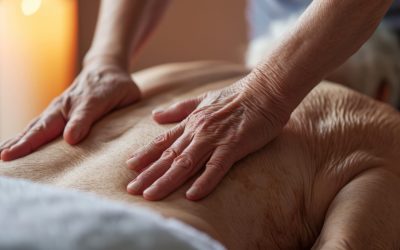
- Use Massage Therapy as a Reset Tool
Massage is one of the most supportive tools for a post-holiday nervous system. It helps regulate the body on multiple levels:
- reduces muscular tension patterns
- lowers stress hormones
- improves circulation
- supports deeper, more restful sleep
- encourages parasympathetic activation
- helps release stored physical stress
- improves body awareness
Many clients report feeling mentally clearer, emotionally steadier, and more grounded after a session. This is because the physical effects of massage influence the broader stress response system. When the body settles, the mind follows.
Massage acts as a reset button, helping the nervous system find its baseline again after weeks of heightened demand.
Your Nervous System Will Settle With Support, Not Pressure
Feeling off after the holidays is not a personal failing. It is a normal, physiological response to a season of overstimulation and high output. Your body needs gentle structure, lower sensory load, intentional breath, supportive movement, and time to recalibrate.
With consistent support, your nervous system shifts from overwhelmed to steady. Focus returns. Clarity returns. Energy returns. And the fog that often defines early January begins to lift.
The most important thing you can give yourself is space to settle instead of pressure to accelerate.
If your body is signaling that it needs a reset, we are here to support you.
Book your next session at marvelousmassage4u.com and help your nervous system find its balance again.


0 Comments